MEET ALICE: LOIS' STORY
Lois is a loving mother for whom financial trade-offs are a constant reality. As a member of the ALICE Community Advisory Committee, she helps shine a light on the experiences of ALICE households nationwide.


Figure 1. Forty-Eight Percent of New York Households Faced Financial Hardship in 2024
Total State Households: 7,809,082
Sources: ALICE Threshold, 2010–2024; U.S. Census Bureau, American Community Survey, 2024
In 2024, based on the Federal Poverty Level (FPL), 14% of New York households were defined as being in poverty. Yet this measure did not account for an additional 34% of the state’s households — more than twice as many — that were also in financial hardship. These households are ALICE: Asset Limited, Income Constrained, Employed — earning above the FPL, but not enough to afford basic expenses in the county where they live.
Combining ALICE households plus those living in poverty, an estimated 48% of households in New York were below the ALICE Threshold in 2024 (Figure 1). This rate was higher than the national average (41%) and placed New York 49th among all states and the District of Columbia (with 1st representing the lowest rate of hardship).
Households below the ALICE Threshold don’t have enough income to afford their basic needs. They are forced to make impossible choices, like deciding whether to pay for utilities or a tank of gas; whether to buy food or fill a prescription; whether to live close to work and pay more for housing or opt for a longer, more costly commute. And they are less likely to have the resources to cover unexpected household expenses (like an unforeseen car repair or a costly medical bill), or to recover from crises, both widespread (like a natural disaster or public health emergency) and personal (like the loss of a job or family member).
There are households below the ALICE Threshold across demographic groups, living in every state and county in the U.S. These households play a vital role in their communities as neighbors, family members, and civic participants, and they contribute to their local economies as workers, consumers, and taxpayers. Workers in households below the ALICE Threshold perform the jobs that keep our economy functioning smoothly — they are child care providers, food service workers, cashiers, personal care aides, delivery drivers, and more. Yet their own households struggle to afford basics.
There is no single cause — or solution — because all households are unique and the reasons that households face financial hardship are complex and interrelated. Targeted interventions can temporarily help ease challenges like food insecurity or housing cost burden, but improving overall financial stability for the long term requires more comprehensive strategies. Coordinated action is needed across multiple levels — including household supports, community infrastructure, employer practices, and public policy — to address the upstream conditions that contribute to persistent hardship for ALICE households in the state and across the nation.


Figure 2. Household Survival Budget Costs Exceeded Wages of Common Jobs and the FPL
Family of Four, New York, 2024
Note: Cooks season and prepare foods in restaurants and other establishments. Tellers process routine transactions, such as cashing checks and depositing money, at a bank or credit union.
Sources: ALICE Household Survival Budget, 2024; Bureau of Labor Statistics—Occupational Employment Statistics, 2024; U.S. Census Bureau, Federal Poverty Measure, 2024
The Federal Poverty Level (FPL) is obsolete. It does not consider the wide variation in cost of living by location (except for a slightly higher state-level FPL for Alaska and Hawai‘i), nor has its methodology been updated since it was formulated in the 1960s, despite changing economic conditions. As a result, the official poverty rate sharply underestimates the true extent of financial hardship in the U.S. And because the FPL, or multiples of the FPL, define eligibility for many types of public assistance, ALICE households often do not qualify. In 2024, the FPL was $15,060 for a single adult and $31,200 for a family of four.
The ALICE measures, developed by United For ALICE, present a more comprehensive picture of financial hardship by including ALICE households — those with income above the FPL, but below the cost of basics.
The two pillars of the ALICE measures are household costs and income. The ALICE Household Survival Budget estimates the cost of household basics — housing, child care, food, transportation, health care, and technology, plus taxes — for each county in New York, derived from a range of publicly available data sources. This is a minimal budget, with no room for emergency expenses, debt payments, or saving for the future. Change over time in the cost of household basics is tracked in the ALICE Essentials Index.
For household income, ALICE measures rely on the U.S. Census Bureau’s American Community Survey (ACS) — both household tabulated data and individual data from the Public Use Microdata Sample (PUMS) records. Households with income below the Household Survival Budget for their household type and county are below the ALICE Threshold — including both households in poverty and ALICE households. The ALICE Threshold is a more comprehensive measure of financial hardship than the FPL. It relies on income, household type, and local cost of living to estimate how many households are not earning enough to cover the basics.
The core issue is the gap between household income and what families need to make ends meet. This makes it impossible for many households to attain financial stability, no matter how hard they work. Figure 2 shows the mismatch between costs, wages, and the FPL in 2024. First, it includes ALICE Household Survival Budget costs for a New York family with two adults, an infant, and a preschooler (totaling $102,540 annually). Second, it shows the household’s combined full-time earnings with one adult in the household working as a cook and the other working as a teller — two common occupations in the state — totaling $76,144 annually. Finally, the FPL for a family of four is shown ($31,200, the same amount for all contiguous U.S. states).
Data Notes: The data included in this Report spans 2010 to 2024 (latest available). This data does not reflect the impact of policy or funding changes that have occurred since 2024, yet it provides an important baseline and context to inform current conversations and decision making. The income data used in this Report relies on ACS estimates. The ACS is based on a representative sample of housing units and people; therefore, these estimates have a degree of uncertainty. Some data points are geographic averages; others are one- or five-year averages depending on population size (these are reported in the Data Sheet). Percentages are rounded to whole numbers, sometimes resulting in percentages totaling 99% or 101%.
ALICE Threshold analysis includes all households regardless of work status, as employment is fluid and most households have members who are working, have worked, are out on disability, or are looking for work. This analysis includes families and roommates but does not include people who are unhoused or living in group quarters (such as college residence halls, skilled nursing facilities, and military barracks). State-level population totals are a summation of county-level estimates.
To provide additional details on household assets, this Report also includes analysis of the Federal Reserve Board’s Survey of Household Economics and Decisionmaking (SHED) (2024).
ALICE: Asset Limited, Income Constrained, Employed — households with income above the Federal Poverty Level (FPL) but less than the basic cost of living in their county
ALICE Household Survival Budget: Reflects the minimum costs of household necessities (housing, child care, food, transportation, health care, and technology) plus taxes, adjusted for all U.S. counties and various household compositions
ALICE Threshold: Derived from the Household Survival Budget, the minimum average income that a household needs to afford basic costs, calculated for all U.S. counties
Below ALICE Threshold: Includes households in poverty and ALICE households combined
Financial hardship: Of New York’s 7,809,082 households, 14% (1,106,981) were below the FPL, and another 34% (2,634,467) were ALICE — households with income above the FPL, but not enough to afford the ALICE Household Survival Budget for their household composition and location. Combining these two groups, 48% (3,741,448) of households were below the ALICE Threshold. Despite some ups and downs, the number of ALICE households in New York trended upward overall between 2010 and 2024 while the number of households in poverty remained relatively flat.
The cost of basics: In New York, the ALICE Household Survival Budget was $37,956 for a single adult and $102,540 for a family of four with two adults, an infant, and a preschooler — much higher than the FPL ($15,060 for a single adult and $31,200 for a family of four). Basic costs varied substantially by county. The annual Household Survival Budget costs for a single adult were highest in New York County (Manhattan) and lowest in Franklin County. For a family of four, costs were also highest in New York County and lowest in Chenango County.
ALICE demographics: There were households below the ALICE Threshold across all Census-reported demographic groups in New York. And as in every state, some populations experienced higher levels of financial hardship. This reflects both longstanding and ongoing policies and discriminatory practices in areas of work, housing, education, and access to community resources that limit financial stability for many families. In 2024, the groups with the highest percentage of households below the Threshold included Black households (66%) and Hispanic households (65%); households headed by people under age 25 (68%) and age 65 and over (57%); single-parent-headed households (77% single-female-headed, 61% single-male-headed); and households in the five boroughs including Bronx, Brooklyn, Manhattan, Queens, and Staten Island (58%). In New York, there was also a notable increase over time (2010–2024) in the total number of households headed by someone age 65+, as well as the number of age 65+ households living below the ALICE Threshold.
ALICE in the labor force: Of the 10 largest industry sectors (by total workers), financial hardship was highest in Accommodation and Food Services, with 52% of workers living in households below the ALICE Threshold. By occupation, rates of financial hardship were as high as 71% for Home Health Aides and 60% for Cashiers, two of the most common occupations in the state.

Lois is a loving mother for whom financial trade-offs are a constant reality. As a member of the ALICE Community Advisory Committee, she helps shine a light on the experiences of ALICE households nationwide.
To capture the reality of household costs across New York, the ALICE Household Survival Budget is calculated for all counties and various household compositions. This budget reflects the minimum cost to live and work in today’s economy (Figure 3). It includes just the basics needed to get by. Not included are things that many families take for granted — eating out, children’s birthday presents, new clothes, or updated appliances. And notably, this budget doesn’t include savings needed to cover unexpected costs, invest, or put toward goals like education, homeownership, or retirement. According to the Federal Reserve Board’s Survey of Household Economics and Decisionmaking (SHED), in the Middle Atlantic Census Division (which includes New York) only 39% of respondents below the ALICE Threshold reported having emergency savings that could cover three months of expenses, and only 48% had retirement assets in 2024. In comparison, 72% of respondents above the Threshold had emergency savings and 92% had retirement assets.
Because the Household Survival Budget reflects the bare-minimum cost of household basics, many families actually pay more for some expenses, forcing them to cut back or sacrifice somewhere else. This leaves families with impossible choices and tradeoffs and the stress of constantly navigating insufficient funds, on top of working and other household responsibilities.
Housing costs are especially challenging. As rental and homeowner costs increase faster than wages, households below the ALICE Threshold face substantial housing cost burden. In New York in 2024:
See the ALICE Budget and Income Status Tool for custom budgets by household composition and location.
Figure 3. The ALICE Household Survival Budget Calculates Basic Costs for Various Household Types
Descriptions, Sources, and Select State-Average Monthly Costs, New York, 2024
| Budget Item Description and Sources (See Methodology for more details) |
Single Adult, Age 18–64 |
Single Adult, Age 65+ |
2 Adults, 1 Infant, 1 Preschooler |
|
|---|---|---|---|---|
| Housing | 110% of Fair Market Rent (FMR) for an efficiency, one-bedroom, or two-bedroom apartment (based on family size), including utilities, adjusted in metro areas using Small Area FMRSource: U.S. Department of Housing and Urban Development (HUD) | $1,210 | $1,210 | $1,569 |
| Child Care | Cost for registered Family Child Care Homes for infants (0–2 years), preschool-age children (3–4 years), and school-age children (5–17 years)Source: New York State Office of Children and Family Services | — | — | $2,345 |
| Food | USDA Thrifty Food Plan by age, with county variation from Feeding AmericaSources: Feeding America; U.S. Department of Agriculture (USDA) | $518 | $477 | $1,404 |
| Transportation | Operating costs for a car (average daily miles by age, cost per mile, license, fees, and insurance), or public transportation where viableSources: AAA, Federal Highway Administration, National Association of Insurance Commissioners (NAIC) (car); Consumer Expenditure Survey (CEX) (public transportation) | $385 | $332 | $801 |
|---|---|---|---|---|
| Health Care | Health insurance premiums based on employer-sponsored plans plus out-of-pocket costs for households with $40,000–$69,999 annual income by age, weighted with the poor health multiplier. For the ALICE 65+ Survival Budget, cost of Medicare Parts A and B, out-of-pocket costs, plus average out-of-pocket spending for the top five chronic diseases as reported by CMS.Sources: Centers for Medicare & Medicaid Services (CMS); CEX (health); Medical Expenditure Panel Survey (MEPS) | $204 | $518 | $688 |
| Technology | Basic broadband internet at home and a smartphone plan with unlimited data for each adult in a household using average cost of three top major providers (AT&T, Verizon, and T-Mobile) and three top basic (lower-cost) wireless providers (Visible, U.S. Mobile, and Consumer Cellular)Sources: Consumer Reports; Federal Communications Commission (FCC) | $129 | $129 | $163 |
| Miscellaneous | Cost overruns estimated at 10% of the budget, excluding taxes, to cover one-time unanticipated costs within the other categories | $245 | $267 | $697 |
| Taxes | Federal payroll taxes (Social Security and Medicare) and federal, state, and local income taxes owed on household income to cover the Survival Budget, as well as the federal and state Child Tax Credit and Child and Dependent Care Tax CreditSources: Internal Revenue Service; Tax Foundation; calculated for United For ALICE by the Federal Reserve Bank of Atlanta (FRBA) | $472 | $534 | $878 |
| Monthly Total | $3,163 | $3,467 | $8,545 | |
| Annual Total | $37,956 | $41,604 | $102,540 | |
| *Hourly Full-Time Earnings Needed to Support the Household Survival Budget | $18.98 | $20.80 | $51.27 | |
*Represents the earnings needed at 40 hours per week, 50 weeks per year to support the annual total, including taxes.
The EITC is a refundable federal tax credit that supports low- to moderate-income workers. Eligibility varies based on income and family composition. Families with children are eligible for the largest credit: In 2024, the maximum credit for eligible families with three or more qualifying children was $7,830, compared to $632 for workers age 25 to 64 without children.
For tax year 2024, income eligibility for federal EITC ranged from $18,591 for an individual with no qualifying children to $66,819 for a married couple with three or more children. The EITC is an effective anti-poverty program for many working families, lifting nearly 4.4 million people above the poverty line in 2024 (based on the Supplemental Poverty Measure). However, not all ALICE households can benefit. For example, in 2024, a family of two adults and two young children in New York needed an income of $102,540 to meet their basic needs, but only qualified for the federal EITC if their income was below $62,688.
In addition to federal EITC, 30 states and the District of Columbia — including New York — have implemented a supplemental state EITC. Eligibility for state credits typically mirrors the federal EITC qualifications, although not all state credits are refundable. New York state EITC is refundable, at 30% of the federal credit.
Benefits of receiving the EITC are far-reaching, with strong links to improved educational outcomes and future employment and better self-reported health status among children raised in recipient households. Despite these benefits, approximately 20% of eligible taxpayers in the U.S. do not claim the EITC. Barriers to participation include not earning enough to file a tax return, lack of awareness, complex rules, administrative burden, language barriers, and distrust of government. States can help promote the EITC by educating the public about the availability of the credits and targeting outreach to families already enrolled in programs such as SNAP and Medicaid; through Volunteer Income Tax Assistance (VITA) programs; by prefilling and sending tax forms to eligible families; and by requiring employers to share information about the EITC with their employees.
Inflation is a key indicator of the health of the economy. When prices increase faster than wages and other sources of income, purchasing power decreases and households struggle to make ends meet.
The ALICE Essentials Index measures change over time in the cost of the household essentials that matter most to ALICE and poverty-level households: housing, child care, food, transportation, health care, and basic technology. The standard measure of inflation in the U.S., the Bureau of Labor Statistics' Consumer Price Index (CPI), tracks a much larger basket of over 200 categories of goods and services — including items that financially insecure households can’t afford on a regular basis, like full-service meals at restaurants, wine, major appliances, travel, and jewelry. Tracking costs over time using the CPI alone can conceal important changes in the costs of household essentials.
Nationally, the ALICE Essentials Index has outpaced the broader CPI since 2007. Costs for both measures increased at a faster pace following the pandemic. Between 2021 and 2024, the ALICE Essentials Index increased at an annual rate of 5.6% compared to 5.0% for CPI — both much faster than the annual rates from 2007 to 2019 (2.7% annual increase for the ALICE Essentials Index and 1.8% for CPI).
In New York, the ALICE Essentials Index also increased faster than the national CPI, as shown in Figure 4. And like the national trend, essential costs in New York increased at a faster rate following the pandemic (6.7% annual increase in the ALICE Essentials Index from 2021 to 2024, compared to 2.7% between 2007 and 2019).
Figure 4. The Cost of Basics is Increasing Faster Than Overall Inflation
Inflation Indices, New York and U.S., 2007–2026
Note: Inflation index scores provide a way to summarize complex data and track changes in costs over time using a numeric scale. The baseline for CPI was set at 100 in 1982. Compared to that baseline, CPI reached 207 in 2007, meaning that prices were 107% higher than in 1982. To compare the ALICE Essentials Index to CPI, the ALICE Essentials Index is set to the 2007 CPI value of 207. With this standardization, Figure 4 shows how the change in these two measures compares over time. In the text, keeping with convention, we report the percent change in each index from one year to another. The ALICE Essentials Index rates for 2025 and 2026 are projections. CPI 2026 is preliminary (based on data through February 2026).
Sources: ALICE Essentials Index, 2007–2026; Bureau of Labor Statistics, 2007–2026—CPI
There are households below the ALICE Threshold across New York, and they reflect a wide range of demographics and household types. In New York, rates of financial hardship differed substantially across demographic groups.
Trends for ALICE and poverty-level households: Between 2010 and 2024, the total number of households in New York increased from 7,199,297 to 7,809,082. During this period, despite some ups and downs, the number of ALICE households in New York trended upward while the number of households in poverty remained relatively flat. These trends continued in 2024 (Figure 5).
Trends for households below the ALICE Threshold (ALICE + Poverty): The number of households below the ALICE Threshold has remained high over time (2010–2024), persisting through shifting economic conditions and the COVID–19 pandemic, and across political administrations. Between 2010 and 2024, the number of households below the Threshold in New York increased from 3,157,383 to 3,741,448. During this period, the percentage of households below the Threshold in New York ranged from a high of 48% to a low of 43% (Figure 5). Most recently, the share of financially insecure households remained the same at 48% of all households below the ALICE Threshold in 2023 and 2024.
Figure 5. The Number of ALICE Households Trended Upward Over Time While Households in Poverty Held Flat
Number of Households by Income, New York, 2010–2024
Note: Data years are comparable over time (methodology changes are backdated as necessary for continuity). However, year-to-year changes should be interpreted with caution; multi-year trends are more reliable. The gray dashed trend lines in this figure highlight the general direction of the point-in-time data for the years shown. These lines indicate whether the numbers of ALICE and poverty-level households have been generally increasing, decreasing, or remaining flat/no significant trend. The ALICE trend line is statistically significant at p<0.001; however, the Poverty trend line is not statistically significant.
Sources: ALICE Threshold, 2010–2024; U.S. Census Bureau, American Community Survey, 2010–2024
Households by age: In 2024, the youngest and oldest households had the highest rates of financial hardship: 68% of households headed by someone below age 25 and 57% of households headed by someone age 65 and over lived below the ALICE Threshold in New York. By comparison, rates were lower for those in their prime working years, with 42% of households headed by people age 25–44 and 44% of households headed by those age 45–64 living below the Threshold (Figure 6).
With the aging of the Baby Boomer generation, households headed by people age 65 and over were the fastest-growing age group in New York (up 44% between 2010 and 2024). They were also the age group with the most substantial increase in the number of ALICE households.
Households by race/ethnicity: Rates of financial hardship differed substantially by race/ethnicity in New York, often reflecting longstanding and ongoing policies and discriminatory practices that restrict access to quality education, work, housing, and other community resources. In 2024:
Trends in the number of households below the ALICE Threshold by race/ethnicity varied from 2021 to 2024 (longest comparable time series). Among the three largest groups, the number of households below the ALICE Threshold increased overall for Black households, Hispanic households, and White Households. More recently, White households below the Threshold dropped slightly from 2023 to 2024.


Households by member composition: In 2024, 45% of single or cohabiting households without children headed by someone under age 65 — the most common household type — were below the ALICE Threshold in New York. The total number of these households increased between 2010 and 2024 (up 6%), as did their number below the Threshold, and to a greater extent (up 20%).
Among families with children under age 18, there were disparities in financial hardship by household type: In 2024, 77% of single-female-headed families and 61% of single-male-headed families were below the ALICE Threshold, compared to 27% of married-parent families. In New York from 2010 to 2024:
Households by location: In 2024, the rate of financial hardship was lower as in the predominantly rural counties of New York, where 41% of all households were below the ALICE Threshold, compared to 49% in predominantly urban counties.
By county, the percentage of households below the Threshold was highest in Bronx County at 76% and lowest in Saratoga County at 29%. Hardship varied even within counties: For example, in Brooklyn (Kings County), the percentage of households below the Threshold ranged from 83% in ZIP code 11212 (Brownsville neighborhood) to 26% in ZIP code 11215 (South Slope neighborhood).
ALICE data is available online by race/ethnicity, age of householder, household type, county, county subdivision, census designated place, ZIP code, and legislative district. See all available geographies and more on the ALICE Mapping Tool.

Figure 6. Financial Hardship Varies Substantially by Demographic Group
Key Demographic Groups, New York, 2024
| Total | Total Below ALICE Threshold |
Percent Below ALICE Threshold |
Poverty
ALICE
Above ALICE Threshold
|
|
|---|---|---|---|---|
| ALL HOUSEHOLDS | 7,809,082 | 3,741,448 | 48% | |
| AGE | ||||
| Under 25 Years | 239,808 | 161,953 | 68% | |
| 25 to 44 Years | 2,484,787 | 1,045,880 | 42% | |
| 45 to 64 Years | 2,774,003 | 1,206,999 | 44% | |
| 65 Years and Over | 2,310,484 | 1,326,616 | 57% | |
| RACE/ETHNICITY | ||||
| American Indian/ Alaska Native |
37,359 | 23,741 | 64% | |
| Asian | 640,185 | 315,414 | 49% | |
| Black | 1,053,767 | 692,904 | 66% | |
| Hispanic | 1,304,714 | 849,701 | 65% | |
| Native Hawaiian/ Pacific Islander |
3,363 | 2,086 | 62% | |
| Two or More Races | 649,542 | 348,173 | 54% | |
| White, Non-Hispanic | 4,515,900 | 1,762,178 | 39% | |
| HOUSEHOLD TYPE | ||||
| Married With Children | 1,211,002 | 327,973 | 27% | |
| Single-Female-Headed With Children |
445,063 | 343,476 | 77% | |
| Single-Male-Headed With Children |
146,221 | 89,269 | 61% | |
| Single or Cohabiting, Under 65, no Children |
3,696,312 | 1,654,114 | 45% | |
| RURAL/URBAN | ||||
| Rural | 656,137 | 268,224 | 41% | |
| Urban | 7,152,945 | 3,473,224 | 49% | |
Note: This figure shows demographic groups included in the ACS tabulated dataset and reporting is limited to these categories. The groups shown in this figure are based on head of household and overlap across categories. Within the race/ethnicity category, all racial categories except Two or More Races are for one race alone. Race and ethnicity are overlapping categories; in this Report, the American Indian/Alaska Native, Asian, Black, Native Hawaiian (includes other Pacific Islanders), and Two or More Races groups may include Hispanic households. The White group includes only White, non-Hispanic households. The Hispanic group may include households of any race. Because household poverty data is not available for the American Community Survey’s race/ethnicity categories, annual income below $15,000 is used as a proxy. Counties are defined as rural or urban based on the USDA’s designation of metropolitan or non-metropolitan at the census tract level. Counties with 50% or more of the population in metropolitan tracts are designated as urban; those with 50% or more of the population in non-metropolitan tracts are designated as rural.
Sources: ALICE Threshold, 2024; U.S. Census Bureau, American Community Survey, 2024
According to the Bureau of Labor Statistics, from 2010 to 2024, the number of workers in New York grew from 8,344,020 to 9,541,880. Most recently, from January to December 2024, the state gained 149,050 workers. During the same period, the unemployment rate remained relatively unchanged — at 4.1%, the same as the pre-pandemic rate (4.1% in January 2020).
New York workers face a range of ongoing challenges. The workplace continues to evolve with the incorporation of new technologies, including AI, and the shift to more precarious work arrangements, such as many part-time jobs and hourly employment. These arrangements make it easier for employers to reduce work hours or cut employment altogether when new technology is adopted, the economy ebbs, or financial priorities change. In addition, with the costs of basics increasing, many jobs in New York do not pay enough to provide financial stability. In New York in 2024:
Data on financial hardship among New York workers shows variations in three cross-cutting areas: industry sector, occupation, and work arrangements.
Industry sector: There are workers below the ALICE Threshold across all industry sectors in New York. Among the 10 largest industry sectors, the percentage of workers living in households below the ALICE Threshold varied from 12% in Finance and Insurance to 52% in Accommodation and Food Services (Figure 7).
Figure 7. Rates of Financial Hardship Vary by Industry Sector
Industry Sector Employment by ALICE Status, New York, 2024
| Industry Sector | Total Workers |
Poverty
ALICE
Above ALICE Threshold
|
|---|---|---|
| Health Care and Social Assistance | 1,701,167 | |
| Educational Services | 1,146,523 | |
| Professional Scientific and Technical Services | 963,040 | |
| Retail Trade | 896,404 | |
| Accommodation and Food Services | 562,175 | |
| Finance and Insurance | 554,454 | |
| Manufacturing | 548,847 | |
| Construction | 542,236 | |
| Transportation and Warehousing | 492,305 | |
| Other Services Except Public Administration | 466,105 | |
Note: This table includes wages of full-time workers residing in New York with income from occupations in the listed sectors. Wages include tips. ALICE Threshold status is determined by comparing workers' total household income to the ALICE Household Survival Budget for their household composition and location.
Sources: ALICE Threshold, 2024; U.S. Census Bureau, American Community Survey, 2024
Common Occupations (Jobs): Many common jobs exist across industry sectors — for example, Customer Service Representatives work in Health Care, Retail Trade, and other fields — so it is also important to look at financial hardship by occupation. In 2024, 35% of workers in the 20 most common occupations in New York were in households below the ALICE Threshold. Occupations with a substantial share of workers in households below the Threshold included Home Health Aides (71%), Personal Care Aides (60%), and Cashiers (60%).
Figure 8. A Large Share of Workers in the 20 Most Common Occupations are Below the ALICE Threshold
Labor Characteristics, Most Common Occupations, New York, 2024
| Most Common Occupations | Total Workers in Occupation Residing in New York | Percent of Workers Below ALICE Threshold | Median Hourly Wage |
|---|---|---|---|
| Elementary and Middle School Teachers | 224,433 | 15% | $39.05 |
| Registered Nurses | 219,564 | 14% | $48.81 |
| Home Health Aides | 194,382 | 71% | $17.57 |
| Retail Salespersons | 181,182 | 46% | $22.89 |
| Cashiers | 173,188 | 60% | $14.64 |
| Janitors and Building Cleaners | 168,079 | 53% | $20.99 |
| Teaching Assistants | 164,044 | 49% | $17.08 |
| Driver/Sales Workers and Truck Drivers | 160,385 | 43% | $25.38 |
| First-Line Supervisors of Retail Sales Workers | 143,258 | 30% | $28.80 |
| Lawyers, and Judges, Magistrates, and Other Judicial Workers | 136,197 | 5% | $94.20 |
| Customer Service Representatives | 135,894 | 37% | $23.92 |
| Construction Laborers | 129,108 | 50% | $23.43 |
| Secretaries and Administrative Assistants, Except Legal, Medical, and Executive | 125,246 | 32% | $24.89 |
| Software Developers | 122,845 | 8% | $73.22 |
| Personal Care Aides | 120,166 | 60% | $19.52 |
| Accountants and Auditors | 113,608 | 12% | $47.83 |
| Financial Managers | 107,893 | 11% | $62.96 |
| Cooks | 100,847 | 57% | $17.08 |
| Chief Executives and Legislators | 98,669 | 7% | $97.62 |
| Postsecondary Teachers | 96,785 | 19% | $48.32 |
Note: This table includes wages of full-time workers residing in New York with income from these occupations. Wages include tips. ALICE Threshold status is determined by comparing workers' total household income to the ALICE Household Survival Budget for their household composition and location. Prior iterations of this table used data from the Bureau of Labor Statistics and are not directly comparable.
Sources: ALICE Threshold, 2024; U.S. Census Bureau, American Community Survey, PUMS, 2024
For more data on the labor landscape, industry sectors, and occupations in your state, visit UnitedForALICE.org/Labor-Force/New York and UnitedForALICE.org/ALICE-EVD.
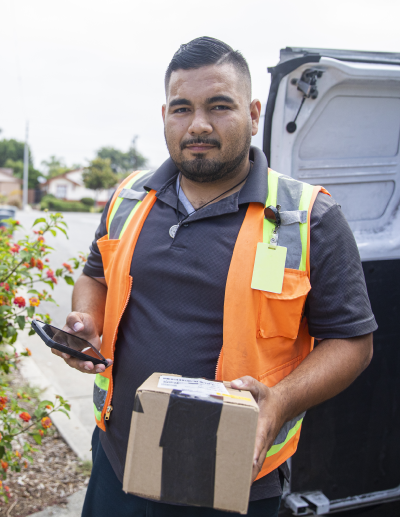
Work arrangements: In 2024 in New York, 67% of people in the labor force worked full-time (35+ hours per week, for 50+ weeks). Yet only about 40% of employed people (age 16+) had the security of a salaried, full-time job. The rest relied on non-standard work arrangements — typically hourly paid work from one or multiple jobs (including part-time and gig work). Hourly and part-time workers are more likely to have fluctuations in income due to schedule changes and variable hours and they are less likely to receive benefits, such as health insurance, paid time off, family leave, or retirement plans.
Both systemic and personal factors can contribute to this. Many workers want to work full time but struggle to find and secure full-time employment. Others work part time because their hours have been reduced. Still others are unable to work full time due to family responsibilities, being in school or training, or dealing with illness or disability. In New York in 2024, of people in the labor force, 27% worked part time (compared to 26% nationally). Part-time workers were much more likely to be below the ALICE Threshold than full-time workers (48% vs. 24%).
In addition, 37% of people in New York (age 16+) were out of the labor force (compared to 36% nationally). This included those who were retired (18%) and those who were out of the labor force for other reasons, such as disability, health issues, caregiving responsibilities, or student status (19%).
In line with broader research, United For ALICE data shows that financial hardship decreases as educational attainment increases. In New York in 2024, the share of workers below the ALICE Threshold was 59% for those with less than a high school diploma; 44% for those with a high school diploma or GED; 36% for those with some college or an associate degree; and 17% for those with a bachelor’s degree or higher.
The cost of higher education puts it out of reach for many ALICE households or requires student loans that have proven to be challenging to repay. The average federal student loan in New York in 2024 was $38,751. According to the 2024 Federal Reserve Bank’s Survey of Household Economics and Decisionmaking, the amount of student debt was similar for respondents below and above the ALICE Threshold across the U.S. (due to sample size, state-level data is not available). But that debt was more of a burden for those below the Threshold to repay. In 2024, for 61% of borrowers below the Threshold, debt totaled more than half of their household income (compared to 30% of borrowers above the Threshold). Borrowers below the Threshold were also twice as likely as those above the Threshold to be behind on payments or in collections (26% vs. 13%).
If all households in New York had enough income to meet their basic needs, not only would individual families be able to pay their bills and experience greater well-being, but their communities, and the wider economy, would benefit as well. Communities are stronger when families are thriving, allowing resources to shift from crisis spending toward improving quality of life (Figure 9).
Figure 9. Meeting Basic Needs Creates Cascading Benefits for Communities
Our vision is a country where ALICE families not only have sufficient income to afford the basics but can also save and invest in their future. It is a country where all households have access to safe, affordable housing; well-paying jobs with benefits; education and training opportunities; safe, high-quality child care programs; comprehensive health services; reliable transportation; equitable financial services and asset building opportunities; and a comprehensive, holistic safety net to support households during times of need. Bringing this vision to fruition will require effort and investment across multiple sectors. While specific policy recommendations are beyond the scope of this Report, the information presented here can help stakeholders contemplate and prioritize which solutions will help ensure economic prosperity for all.
Community members:
Nonprofits and community organizations:
Employers:
Policymakers:
Are you wondering how to get started? Here are some of the many applications of the United For ALICE data, tools, and resources. ALICE data is being used to:
Learn more: See examples of policies, practices, and programs United For ALICE partners have implemented using ALICE data in the ALICE in Action database.

| STATE | RANK | TOTAL | Household Income Status | ||
|---|---|---|---|---|---|
| (1 = lowest % Below ALICE Threshold) | Number of Households | Households in Poverty |
ALICE Households | % Households Below ALICE Threshold |
|
| U.S. | 131,939,401 | 16,495,052 | 38,027,832 | 41% | |
| Alabama | 45 | 2,039,058 | 324,519 | 587,238 | 45% |
| Alaska | 17 | 270,986 | 23,913 | 77,466 | 37% |
| Arizona | 33 | 2,978,528 | 345,084 | 873,504 | 41% |
| Arkansas | 42 | 1,232,610 | 196,766 | 335,094 | 43% |
| California | 48 | 13,791,591 | 1,646,419 | 4,822,094 | 47% |
| Colorado | 10 | 2,452,702 | 236,293 | 640,791 | 36% |
| Connecticut | 24 | 1,454,541 | 159,441 | 410,493 | 39% |
| Delaware | 25 | 412,304 | 41,375 | 120,719 | 39% |
| District of Columbia | 13 | 329,687 | 49,443 | 71,152 | 37% |
| Florida | 47 | 9,115,371 | 1,126,478 | 3,143,688 | 47% |
| Georgia | 43 | 4,141,265 | 543,142 | 1,262,000 | 44% |
| Hawai‘i | 44 | 493,475 | 51,810 | 164,744 | 44% |
| Idaho | 16 | 737,568 | 80,370 | 194,968 | 37% |
| Illinois | 20 | 5,095,290 | 627,541 | 1,315,178 | 38% |
| Indiana | 21 | 2,755,436 | 340,168 | 712,607 | 38% |
| Iowa | 4 | 1,329,232 | 147,602 | 301,391 | 34% |
| Kansas | 11 | 1,189,214 | 136,310 | 290,281 | 36% |
| Kentucky | 40 | 1,835,838 | 301,973 | 481,948 | 43% |
| Louisiana | 51 | 1,836,752 | 344,381 | 548,775 | 49% |
| Maine | 28 | 607,168 | 72,490 | 168,350 | 40% |
| Maryland | 23 | 2,395,600 | 239,306 | 694,650 | 39% |
| Massachusetts | 37 | 2,828,403 | 304,302 | 883,682 | 42% |
| Michigan | 29 | 4,109,904 | 551,257 | 1,079,772 | 40% |
| Minnesota | 6 | 2,340,041 | 231,727 | 579,571 | 35% |
| Mississippi | 50 | 1,162,158 | 220,707 | 336,806 | 48% |
| Missouri | 19 | 2,533,895 | 327,532 | 636,928 | 38% |
| Montana | 15 | 466,267 | 51,964 | 121,077 | 37% |
| Nebraska | 8 | 811,502 | 91,573 | 192,470 | 35% |
| Nevada | 31 | 1,239,322 | 145,389 | 357,634 | 41% |
| New Hampshire | 9 | 566,004 | 47,504 | 151,962 | 35% |
| New Jersey | 26 | 3,543,650 | 345,620 | 1,050,032 | 39% |
| New Mexico | 38 | 844,438 | 140,602 | 215,792 | 42% |
| New York | 49 | 7,809,082 | 1,106,981 | 2,634,467 | 48% |
| North Carolina | 32 | 4,452,562 | 570,996 | 1,245,057 | 41% |
| North Dakota | 1 | 340,817 | 39,336 | 67,247 | 31% |
| Ohio | 12 | 4,910,723 | 643,139 | 1,149,335 | 37% |
| Oklahoma | 41 | 1,592,174 | 243,117 | 440,254 | 43% |
| Oregon | 34 | 1,742,091 | 212,032 | 502,271 | 41% |
| Pennsylvania | 22 | 5,353,274 | 654,981 | 1,431,066 | 39% |
| Rhode Island | 39 | 446,751 | 58,903 | 131,627 | 43% |
| South Carolina | 35 | 2,210,021 | 302,424 | 608,075 | 41% |
| South Dakota | 3 | 372,581 | 39,585 | 85,112 | 33% |
| Tennessee | 36 | 2,882,467 | 395,081 | 796,596 | 41% |
| Texas | 30 | 11,388,247 | 1,523,679 | 3,085,614 | 40% |
| Utah | 2 | 1,170,555 | 100,603 | 289,345 | 33% |
| Vermont | 27 | 276,206 | 29,959 | 78,863 | 39% |
| Virginia | 18 | 3,405,893 | 345,879 | 935,739 | 38% |
| Washington | 14 | 3,154,247 | 313,142 | 856,500 | 37% |
| West Virginia | 46 | 730,791 | 125,865 | 204,987 | 45% |
| Wisconsin | 7 | 2,513,972 | 269,822 | 603,981 | 35% |
| Wyoming | 5 | 247,147 | 26,527 | 58,839 | 35% |
Visit UnitedForALICE.org to explore interactive data and resources. Click on the icons below to get started.
Launched in 2009 with a study of financial hardship in one New Jersey county, the nonpartisan United For ALICE movement has grown to include 41 states and the District of Columbia. The ALICE research shines a spotlight on households facing financial hardship — their strengths as well as the challenges they face. With data, tools, and resources, United For ALICE equips community partners — including United Ways, foundations, government, corporations, and other nonprofits — to build equitable policies and programs that promote financial stability for ALICE and for all.
To create the ALICE Reports, our team of researchers works with Research Advisory Committees composed of experts from our partner states. This work is guided by our rigorous methodology, which is updated biennially with experts from across our Research Advisory Committees.
Director and Lead Researcher: Stephanie Hoopes, Ph.D.
ALICE Research Team: Andrew Abrahamson; Ashley Anglin, Ph.D.; Catherine Connelly, D.M.H., M.A.; Jessica Fernandez; Victoria Mutuku, M.A.; Bhavyashree Putta, M.S.
The State of ALICE in New York: 2026 Update on Financial Hardship is brought to you by United Way of New York State. State sponsors include:


To learn more about how you can get involved in advocating and creating change for ALICE in New York, contact: Therese Daly, President & CEO, United Way of New York State, at dalyt@uwnys.org.
Suggested Citation:
United For ALICE. (2026). "The State of ALICE in New York: 2026 Update on Financial Hardship."
https://www.UnitedForALICE.org/New York
© Copyright 2009–2026 United Way of Northern New Jersey. All rights reserved.